 FOLLY Deployment Mechanism Source
Abstract summary
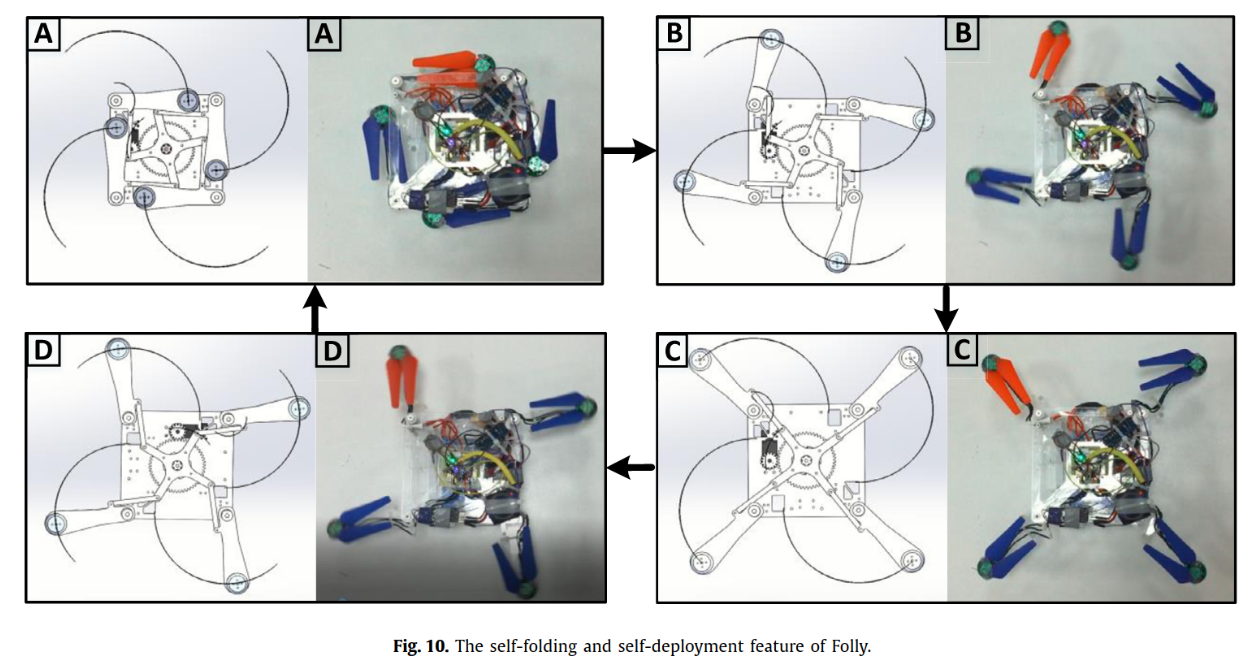
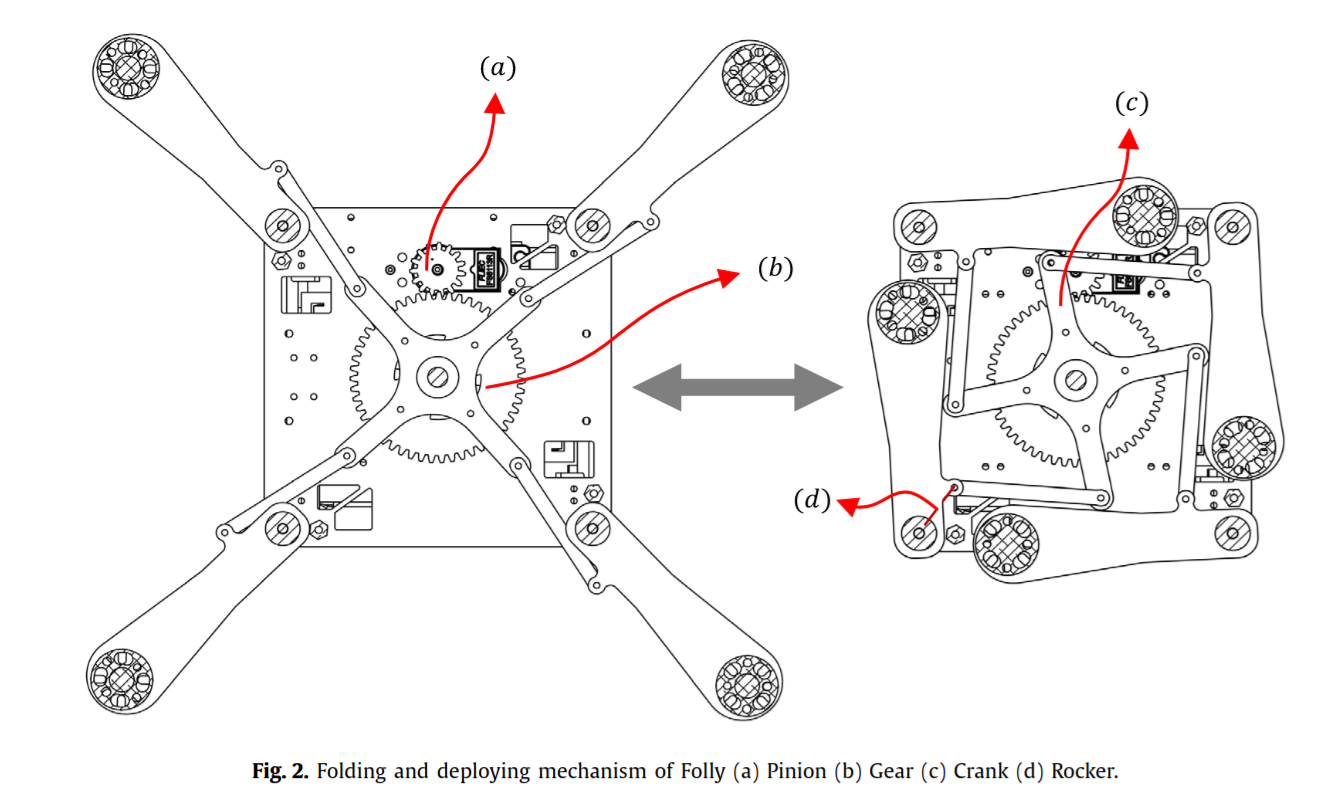
The journal study develops FOLLY's self-folding mechanism as a means of making quadcopters easier to transport and integrate into autonomous systems. A single servo drives a four-bar crank-rocker linkage coupled through gears, coordinating the movement of the arms. The paper analyzes the mechanism's position, velocity, acceleration and torque requirements and compares numerical results with dynamic simulation. It also examines frame-material choices and flight operation. Experiments evaluate folding, deployment, hovering, battery behavior and object-tracking control. The prototype completes an arm transition in approximately 0.6 seconds. The study extends the earlier conference design with a more detailed mechanical analysis and experimental assessment of the complete aerial platform.

Turcan Tuna
PhD Candidate at Robotic Systems Lab, ETH Zurich
My research mainly focuses on incorporating state-of-the-art optimization and machine learning approaches into robust localization and mapping frameworks. Specifically, I specialize in robust localization and perception in degenerate and challenging environments utilizing optimization and learning based methods. Additionally, I am highly interested in multi-modal fast volumetric mapping and efficient and consistent local and global representations.