Scientific Exploration of Challenging Planetary Analog Environments with a Team of Legged Robots
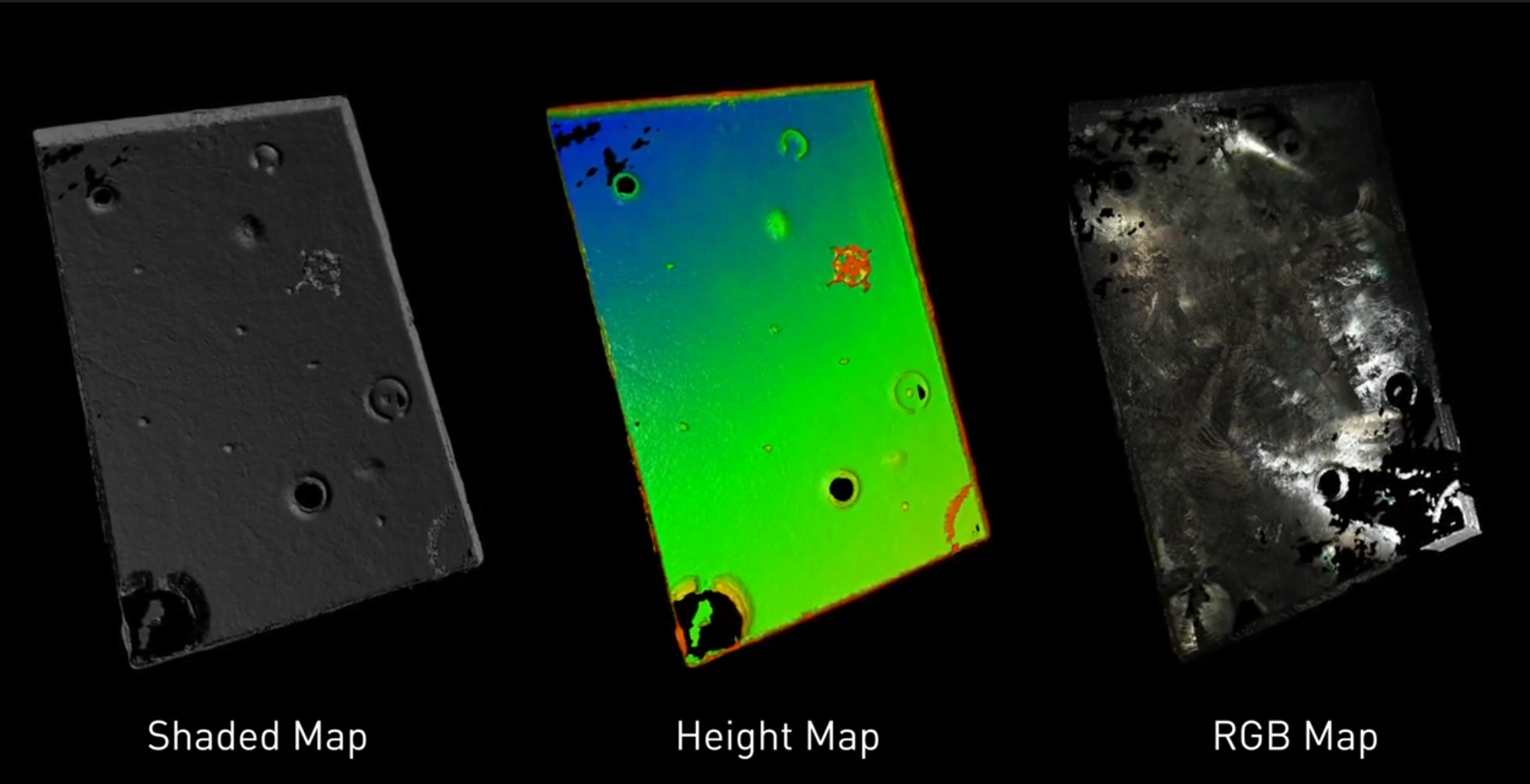 Dense Mesh Maps Source
Abstract summary
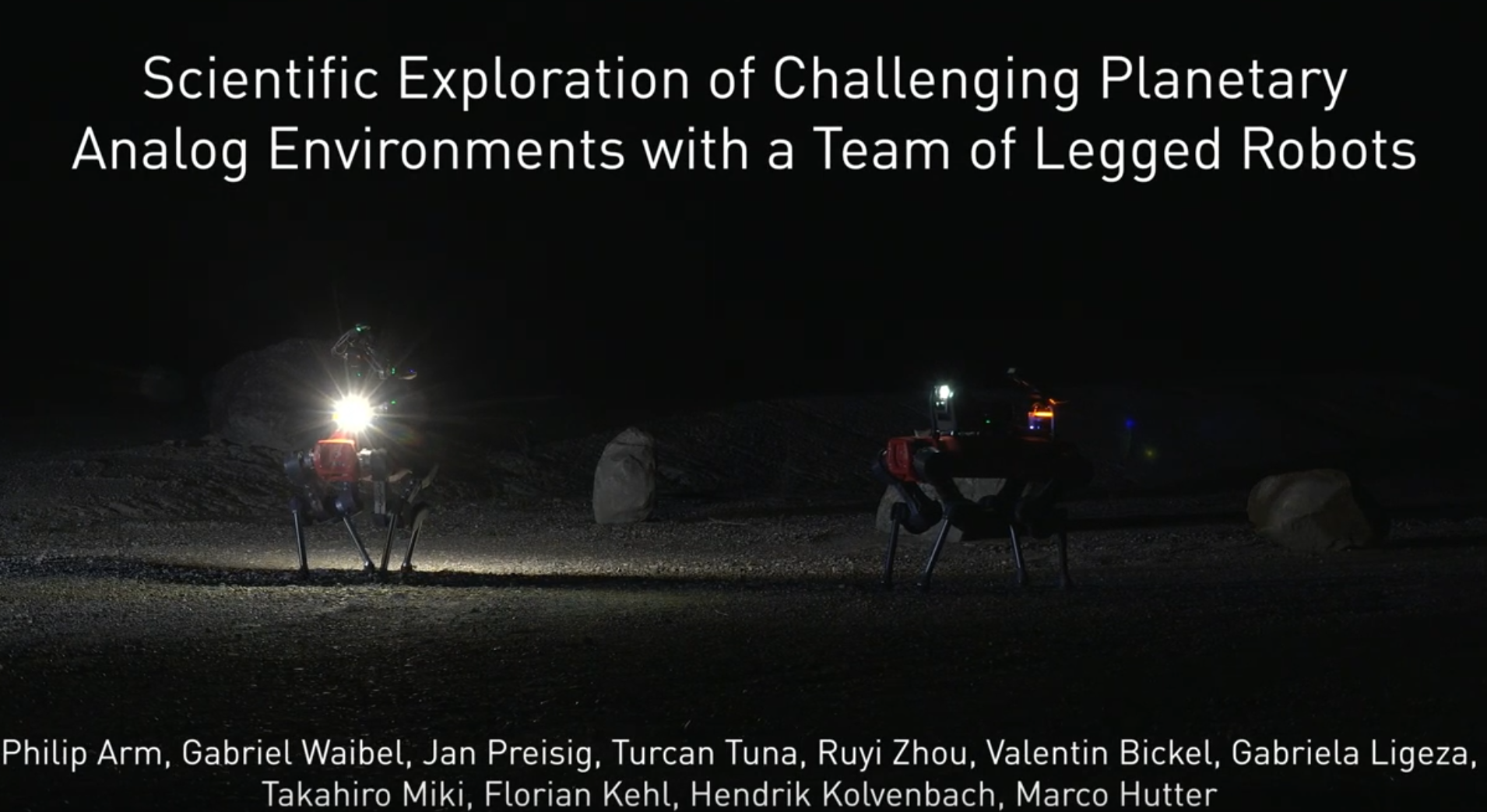
This work investigates how a team of legged robots can explore terrain that limits conventional planetary rovers. The robots share core mobility and perception capabilities while carrying complementary scientific payloads; one platform also uses an arm for precise measurements. Locomotion, mapping, target identification and task-level autonomy are integrated into a coordinated exploration system. The team is evaluated at an ExoMars rover testbed, a Swiss quarry and the Space Resources Challenge in Luxembourg. Deployments include loose ground, unstructured terrain and steep granular slopes. The experiments demonstrate how specialization and redundancy can support efficient scientific missions while extending access to difficult sites. Online maps and post-mission reconstructions help operators interpret the collected observations.
Turcan Tuna
PhD Candidate at Robotic Systems Lab, ETH Zurich
My research mainly focuses on incorporating state-of-the-art optimization and machine learning approaches into robust localization and mapping frameworks. Specifically, I specialize in robust localization and perception in degenerate and challenging environments utilizing optimization and learning based methods. Additionally, I am highly interested in multi-modal fast volumetric mapping and efficient and consistent local and global representations.